UNDERSTANDING WATER CREMATION

THE PROCESS

—FLORIDA'S ONLY WATER CREMATION FACILITY—

What Is Water Cremation?

Water cremation, also known as aquamation or alkaline hydrolysis, is an alternative to traditional flame cremation that uses warm water, natural alkalinity, and gentle circulation to accelerate the natural process of decomposition.

Instead of using fire, the process returns the body to its basic elements in a way that mirrors what would occur naturally in soil over time.

After the process is complete, the remaining bone material is carefully dried and processed into bone-white ashes, which are returned to the family.

—AN ALTERNATIVE TO FLAME CREMATION—

Why Florida Families Choose Water Cremation

A More "Natural" Process


Water cremation mirrors the natural cycle of life, returning the body to its basic elements without the use of fire.

Lower Environmental Impact


The process uses up to 90% less energy than flame cremation and produces no direct emissions.

The Same Memorial Options


Families can still hold funerals, celebrations of life, memorial services, and ash scatterings.

A Choice That Feels Right


End-of-life decisions are very personal. Many families appreciate having an option that aligns with the values they carry.

—A QUICK OVERVIEW—

How Water Cremation Works

Water cremation is a carefully controlled process performed by trained professionals. The entire process is conducted with dignity, care, and oversight at our dedicated facility.

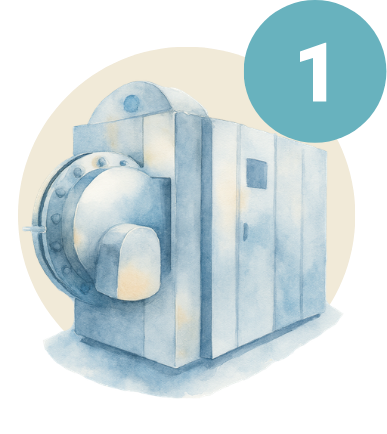
  • 1. The body is placed in a specialized stainless-steel vessel.

    This vessel has been specially designed for the resomation of human bodies. The body is covered in a bio-shroud and slid carefully into the vessel.

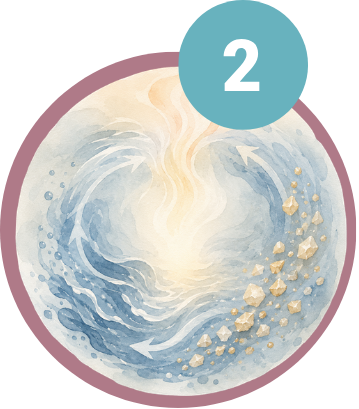
  • 2. A solution of water and alkaline minerals is introduced.

    The vessel is filled with approximately 95% water and 5% alkali, which helps break down organic material in a way that mirrors the natural process of decomposition—but rather than taking weeks, months, and years, it only takes about 4-6 hours.

  • 3. Gentle heat and circulation help the process along.

    The vessel will heat the water and alkali mixture to 302 degrees Farenheit, and gentle circulation helps move things around. The water never boils as the vessel is pressurized, and the circulation is not aggressive.

  • 4. Organic material is reduced to its basic elements.

    The process breaks down all soft tissue into a sterile, nurtient-rich solution of water, amino acids, sugars, salts, and peptides. We call this "effluent". There is no longer any genetic information (DNA) or pathogens in the effluent, and it is safely returned to our municipal wastewater system. 


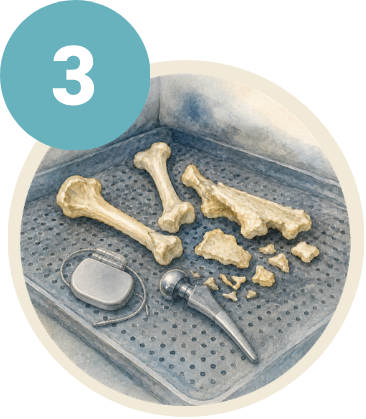
    All that remains in the vessel at that point are the bones and any non-organic materials, such as medical prosthetics and implants.

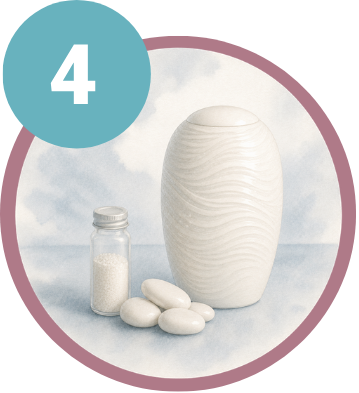
  • 5. The remaining bones are dried and processed into "ash".

    After the process is complete, the remaining bones are carefully dried and processed into a fine, bone-white "ash", which is returned to you just as they would be after traditional cremation. 


    Any non-organic materials, such as medical implants, are respectfully separated. Families may request that these items be returned to them, or they are responsibly recycled through a reputable medical metal recycling program.

—A SUSTAINABLE OPTION—

Environmental Impact of Water Cremation


Water cremation uses

85–90%

less energy than flame cremation.

Because it uses steam, it produces

0%

combustion emissions.


—EXPAND YOUR UNDERSTANDING—

Resources About Water Cremation


This video features our partner Dean Fisher explaining the Water Cremation process while he was the Director of the Donated Body Program at the David Geffen School of Medicine at UCLA.

Animated Overview of the Water Cremation Process
(This video has no sound.)
—DID YOU KNOW?—

Frequently Asked Questions

How It Works
  • What is water cremation?

    Water cremation is an alternative to traditional flame cremation that uses warm water, natural alkalinity, and gentle circulation to accelerate the natural process of decomposition. The result is similar to traditional cremation, with ashes returned to the family for memorialization.

  • What are the other names for water cremation?

    The scientific name for water cremation is alkaline hydrolysis. It is also commonly referred to as aquamation, resomation, green cremation, flameless cremation, liquid cremation, chemical cremation, and green cremation.

  • What does the family receive after water cremation?

    You will receive cremated remains that are similar to those returned after traditional cremation. The "ashes" are typically lighter in color and finer in texture, and they can be kept, scattered, or memorialized in the same ways.

  • Can we still hold a funeral or memorial service before or after water cremation?

    Yes. Water cremation does not change how you might choose to honor your loved one. Memorial services, funeral viewings, celebrations of life, and other tributes can still be held before or after the cremation.

  • What happens to medical implants or prosthetics during water cremation?

    Medical implants and other non-organic prosthetics do not need to be removed before water cremation and are recovered after the process. Families may request that these items be returned to them, or they are responsibly recycled through a reputable medical metal recycling program.

  • Can clothing/items be placed with our loved one for the water cremation process?

    Due to the delicate nature of the vessel's operation, only organic, biodegradable items can be placed inside with your loved one—like flowers.

  • What happens to the water during the water cremation process?

    At the end of the process, the remaining liquid is a sterile, nutrient-rich solution of water, amino acids, sugars, and salts. The water cremation process destroys all DNA, RNA, pathogens, and contaminants, making the liquid bio-safe, so this nutrient-dense water is typically sent to municipal wastewater treatment systems. Sometimes families request a small amount to be used as an excellent fertilizer for their personal gardens.

  • What does the effluent from water cremation look/smell like?

    It looks like tea or coffee with cream, and it has a loamy, earthy scent not unlike mushroom soup.

  • How long does water cremation process take?

    The water cremation process itself typically takes 4 - 6 hours. 

  • Why do families choose water cremation?

    Families choose water cremation for many different reasons. Some are drawn to its environmental benefits, while others feel the process itself is more natural or aligns with their personal values. Many families simply appreciate having another option when making end-of-life decisions.

LEGAL
  • Is water cremation legal in Florida?

    Yes.


    Water cremation (alkaline hydrolysis) is fully legal in Florida and can only be performed at licensed facilities.


    Currently, Gentle Water Cremation is the only licensed facility in Florida.

  • Where is water cremation currently legal in the United States?

    The following 28 states have passed laws explicitly legalizing and regulating water cremation for humans: Alabama, Arizona, California, Colorado, Connecticut, Florida, Georgia, Hawaii, Idaho, llinois, Kansas, Maine, Maryland, Massachusetts, Michigan, Minnesota, Missouri, Nevada, North Carolina, North Dakota, Oklahoma, Oregon, Tennessee, Utah, Vermont, Washington, West Virginia, Wyoming.


    New York has most recently finalized regulatory frameworks.

  • Where is water cremation legal but no providers exist?

    According to industry tracking from the Cremation Association of North America (CANA), there are 5 states where the legislature has successfully updated its funeral codes to permit human alkaline hydrolysis, but local funeral homes have not yet purchased the high-cost machinery or obtained local wastewater permits to offer it:

    • Idaho
    • Kansas
    • Maryland
    • Vermont
    • Wyoming
  • Can I choose water cremation if my state does not offer it?

    If water cremation is not available in your state, you can make arrangements through a local, trusted funeral home to transport the deceased across state lines to a neighboring state where there is an active facility. Note that some cases, embalming might be required for crossing state lines—and the appopriate permits must be secured.

  • How can I help make water cremation legal in my state?

    Start by contacting your state legislators and asking them to support legislation that adds alkaline hydrolysis/water cremation as an approved form of cremation or final disposition.


    The most helpful message is usually simple: families deserve more legal choices at the end of life, including options that may better reflect their environmental values, spiritual beliefs, or discomfort with other disposition options. You can also contact your state funeral board, local funeral homes, environmental organizations, and consumer-choice groups to ask whether any legislation is already being discussed, too.

ENVIRONMENTAL IMPACT
  • Is water cremation better for the environment than flame cremation?

    Water cremation has a lower environmental impact than flame cremation because it does not use fire and produces no direct combustion emissions. The process uses water, alkalinity, heat, and motion to return the body to bone remains, which are then dried and returned to the family.


    Many providers and industry sources also report that water cremation uses significantly less energy than flame cremation, with some estimates citing up to 90% less energy depending on the equipment and comparison model.

  • Does water cremation release emissions into the air?

    No direct air emissions are produced during the water cremation process because there is no flame or combustion. That means no direct smoke, mercury vapor from dental fillings, particulate matter, or combustion-related air pollution from the process itself.

  • Does water cremation use a lot of water?Title or Question

    Water cremation does use water, but the amount is modest compared with many everyday uses and must be understood alongside the energy and emissions avoided by not using flame. The exact amount depends on the equipment, cycle type, and facility setup.

  • Does water cremation use chemicals?

    Yes, but not in the way people often picture. Water cremation uses an alkaline solution, not acid. The solution helps accelerate the same natural breakdown that occurs after death, using water, heat, and motion inside a controlled vessel. During the process, the alkalinity is consumed as it breaks down soft tissue. What remains is a sterile liquid that is handled through regulated wastewater systems, and the bones are dried and returned to the family as cremated remains.

  • What happens to the water afterward?

    After the process is complete, the remaining liquid is sterile and contains water, salts, amino acids, sugars, and peptides. There is no tissue and no DNA left after the alkaline hydrolysis process is complete.


    The liquid is then released through the appropriate wastewater system according to local rules and utility requirements. It is a closely regulated aspect of the process. State law may allow water cremation, but local wastewater authorities can still have their own requirements for discharge.

  • Is the water cremation liquid harmful?

    No. The remaining liquid is considered sterile after the process. It does not contain tissue or DNA. But that said, it still has to be handled properly. Facilities must follow applicable wastewater rules, including local requirements related to discharge, pH, equipment, plumbing, and treatment. 

  • Is water cremation more environmentally friendly than traditional burial?

    Water cremation avoids many of the resource-heavy parts of traditional burial, including embalming, caskets, burial vaults, and long-term cemetery land use. For families who want a lower-impact option but still want cremated remains returned, water cremation can offer a gentler alternative.

  • How does water cremation compare to green burial and human composting?

    Green burial, human composting, and water cremation all offer a lighter environmental footprint than conventional burial or flame cremation. The difference is in what each one gives back.


    Green burial gives the body back to the earth. Human composting creates soil that can support new plant life. Water cremation returns cremated remains to the family without using fire, embalming, a casket, a concrete vault, or cemetery land.


    That makes water cremation a strong option for families who want a lower-impact choice but still want the flexibility of cremated remains: to keep, bury, scatter, divide among loved ones, or place in a meaningful memorial.